There was an error in this gadget

Friday, July 13, 2012

Pictures of Slimmer, Redesigned PS3 Leaked

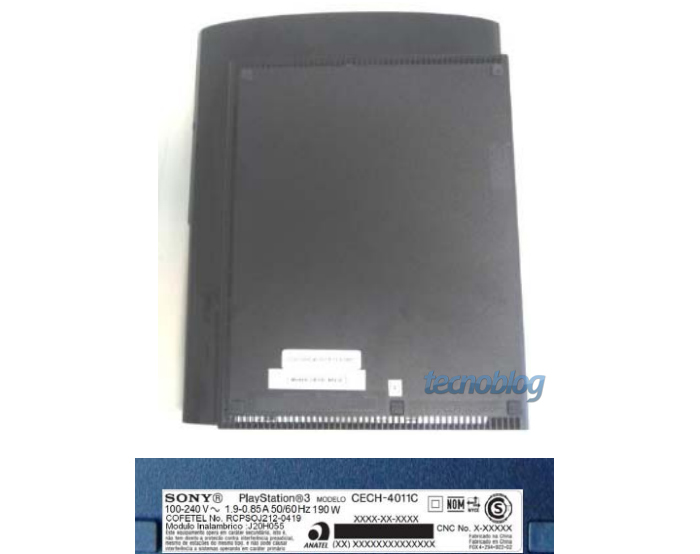
Pictures of a redesigned PlayStation 3 console have been leaked onto a Brazilian tech blog. The legitimacy of the pictures and design is being questioned, but the ordeal has taken the gaming community by storm. 

The noted specs of the console are even a bit more sketchy, as the Brazilian blog lists the console having a 16 GB hard drive, which would be extremely small for consumers and warrant an immediate upgrade. 


It isn't a total surprise though, because Sony does tend to release different models of their consoles towards the end of their lifespans. Both the original PlayStation and the PlayStation 2 had slimmer, more affordable redesigns. 

The rest of the pictures can be seen below:


Saturday, June 2, 2012

Every N64 Game, Ever

A YouTuber, by the name of finngamer, has completed a collection of every N64 game ever released. This a collection of over 400 games from all regions. He also owns nearly every North American, European, and Japanese console, accessory, and peripheral. 


You can visit him on YouTube here and visit his website here.

Friday, June 1, 2012

Apple's Video Game Console -- The Apple Bandai Pippin


Despite your opinion of their products, Apple is easily accounted for as one of the most successful companies today. Though it may seem surprising to some, during the 90s the company was in a critical amount of financial danger. For those who don't know, neither Steve Jobs nor Steve Wozniak were running the company during this time. The struggling of the company can be accredited to some bad choices made by a few so-so CEOs. One of the very unsuccessful products put out by the company, in 1995, was a game console -- The Apple Bandai Pippin (the Pippin Atmark in Japan).


The Japanese console (white) atop the
US variation (black). 
The game console was designed by Apple and then produced, advertised, and marketed by the toy company, still known today as, Bandai. Though the Pippin looked like a game console, it was, despite its very limited operating system, heavily marketed as a budget computer. The console used CD-Roms as its optical media and also had a slew of accessories to turn the console into more of a personal computer.

The console retailed for $599, which was outrageously priced; especially when compared to its competitors. The Sega Saturn and the Sony PlayStation were both significantly cheaper and both had vastly larger game libraries.

The controller featured both a d-pad and
a trackball. 
Only 18 games were released for the Pippin (often stylized as Pipp!n) in the United States and less than 80 were available in Japan. The games, which are mostly unimpressive, also ran on computers with the Classic Mac OS operating system -- one more reason to not purchase the console. Only 100,000 consoles were manufactured and only 42,000 were sold. The console had a planned European release but was scrapped after its horrible sales in the US and Japan.


Thursday, May 31, 2012

$99 Ice White PSP Coming Soon

Over the past few years, we've seen various designs of the PSP. From different colors to brighter screens, it seems like each PSP was more functional than the last. Although the Vita has taken off already, it seems that Sony still refuses to drop the PSP hardware and, this time, has come up with an interesting budget model. 

The Ice White PSP set at $99.


The "Ice White" PlayStation Portable will actually lack features that its previous models boasted. This PSP, along with the PSP E-1000 -- a European exclusive, has no video out, only a single mono speaker, and no WiFi capabilities. 

Though the console is only $99, it seems like its lack of WiFi is a poor choice. Many of the PSP's features and games make use of WiFi, not to mention the PlayStation Store (which seems especially odd with Sony's push for digital content). 

It seems like this budget PSP is being geared towards people who don't want to drop the extra cash for a Vita but, in all seriousness, this PSP lacks too many features to entertain the interests of a potential Vita buyer. 

It seems to me, like one would be better off purchasing a second hand PSP 3000 that would have more features and cost around the same price. 

Tuesday, May 29, 2012

PS1 Games on The Vita?

The more I read up on people's critiques and criticisms of the PlayStation Vita, the more I see the same single request - support for PS1 games on the handheld. It seems strange to me that Sony didn't include this feature at launch, and still hasn't given Vita owners the ability to play PS1 classics. After all, PS1 games play on the PSP and the Vita is supposed to be a more powerful console, right? The only reasoning I can see behind Sony's actions is that their are some sort of licensing issues between Sony and the games' developers.

A shot of the PS1 emulator in action on the PS Vita.
Apparently, because Sony has yet to act, an unknown dev has reported that he has been able to access the PS1 emulator within the Vita's PSP emulator and boot, at least some, original PlayStation roms. It has been reported that the unknown developer is planning on releasing a hack after working out some audio issues.

The news of this has excited a lot of the PS Vita scene. I, personally, have mixed feelings on the topic. In my opinion, it is healthy for their to be homebrew development for a console but, like always, homebrew leads to piracy. I would hate to see the Vita fall due to piracy, much like some say happened with the PSP. The Vita is an amazing handheld and still has a lot of potential, the best case scenario would be for Sony to release a stable and legitimate method of running original PlayStation games.

There is also a video from the unknown developer of him demonstrating a PS1 game running on the Vita.

Saturday, May 26, 2012

Why Wasn't The Dreamcast a Success?

Despite its impressive game library, powerful hardware, and highly innovative features, the SEGA Dreamcast was a commercial failure. The console itself was impressive, it was well built, had a nice design, and boasted several features, such as online gaming, that have now become industry standards. In reality, the only place SEGA's console failed was in sales to its main competitor, the PlayStation 2.

SEGA made a few mistakes that caused the company to cut the console's lifespan and unfortunately become abruptly discontinued.

The first of these issues arose during the development of the Dreamcast's predecesor, the SEGA Saturn. Back in 1995, before the SEGA Saturn had been released, SEGA had gotten word of a brand new competitor to the market -- the Sony PlayStation.


Sony's console gained a lot of attention from the gaming community and this made SEGA nervous. SEGA originally planned a release for the Saturn for the Fall of that year, giving developers enough time to finish launch titles. Around this time though, Sony announced a release for the PlayStation at about the same time as SEGA had planned for its console -- this is where the first issue occured. SEGA panicked and feared that their console would suffer in sales if the PlayStation release date was too close to that of the Saturn. SEGA tried to counter Sony by moving the Saturn's release date up by several months to May of 1995 in order to get a head start on sales from consumers anxious to join the next generation of gaming. As a result of the sudden change of the Saturn's release date, many software developers became upset. Companies, like Electronic Arts, now had to rush their titles if they wanted to be ready for launch day -- now 5 months earlier than originally planned. Because of this, many developers, including Electronic Arts, vowed to, and surely did, boycott SEGA in the future. What did this mean for SEGA during the Dreamcast's life? It meant that the Dreamcast wouldn't have popular games such as Madden available to consumers thus hurting console sales once the Dreamcast's competitors hit the market.

Sega's online gaming service,
similar to PSN & Xbox Live.

The next issue, and probably the issue that hit sales most, was the Dreamcast's lack of DVD playback. Before the PlayStation 2 was released, the Dreamcast had excellent sales worldwide, but once consumers realized they could get a DVD player AND a game console -- the Dreamcast had lost its appeal, especially to the general consumer. You have to keep in mind that back in the year 2000, DVDs were not mainstream yet and DVD players were very expensive. Not only was the PS2 a DVD player, but it was, especially in Japan, one of the cheapest DVD players on the market.

The third and final issue for the Dreamcast was piracy. The piracy protection could easily be bypassed and backups of games could be played with no modifications to the console. People soon realized that the image of a game could be burned onto a standard CD-R and played with (and later without) a boot disc. Keep in mind though, that in 1999 most people had dial up internet and CD-Rs were expensive. Piracy was not enough to floor the console's lifespan alone.

Despite these few unfortunate issues, the console is top notch. The Dreamcast is still popular amongst retro gamers and collectors and is a fun console to play to this day because of its extensive library and vast homebrew scene.


Friday, May 25, 2012

Jet Set Radio to be Released on Vita

One of the Sega Dreamcast's most iconic titles, Jet Set Radio (Jet Grind Radio in North America), has been announced for the PlayStation Vita alongside the PS3, Xbox 360, and Wii. Jet Set Radio, known for its distinct graphics, is a game where you rule the streets through inline skating and graffiti, amongst other things. Because of the uniqueness of the game, it has a large following -- even to this day. A huge stir of excitement has been created by fans of the game who have wanted to see an HD release of the game, which first saw the light of day over 10 years ago.


Jet Set Radio looks amazing in its original form due to its use of cel-shading, a type of non-photorealistic rendering designed to make computer graphics appear to be hand-drawn [wiki], and will surely be seen as eye candy in high definition. The Vita release will be at the same time as its console counterparts and will make use of the handheld's touch screen.